Choosing the right Needle Holders is no longer a simple catalogue decision. Global buyers now compare grip design, jaw alignment, alloy quality, sterilization performance, and supplier consistency. A 17-centimeter holder may feel balanced in one surgeon’s hand, yet awkward in another’s. Small differences matter during delicate suturing.
Market reports show strong demand for surgical instruments, although their estimates differ. Grand View Research valued the global surgical instruments market at approximately USD 14.6 billion in 2023. Fortune Business Insights reported a different 2023 figure, near USD 14.1 billion. The gap deserves attention. Definitions, regions, and product categories vary. Buyers should not treat one forecast as absolute truth.
Surgeon and patient-safety expert Dr. Atul Gawande wrote, “The volume and complexity of what we know has exceeded our individual ability to properly deliver its benefits.” His point applies directly to Needle Holders procurement. A trusted product needs more than a polished finish. It needs documented materials, repeatable production, reliable inspection, and practical feedback from operating teams.
This guide examines ten Needle Holders for global buyers. It considers Mayo-Hegar, Crile-Wood, Olsen-Hegar, and specialized micro designs. It also weighs reusable and disposable options. Some conclusions may remain imperfect because hand size, procedure type, and hospital protocols differ. That uncertainty is useful. It prevents a ranking from becoming a substitute for clinical judgment.
Evidence matters. So does touch. A needle holder that closes smoothly, resists corrosion, and remains comfortable after repeated sterilization can protect both efficiency and precision.
What Are the Top 10 Needle Holders for Global Buyers?
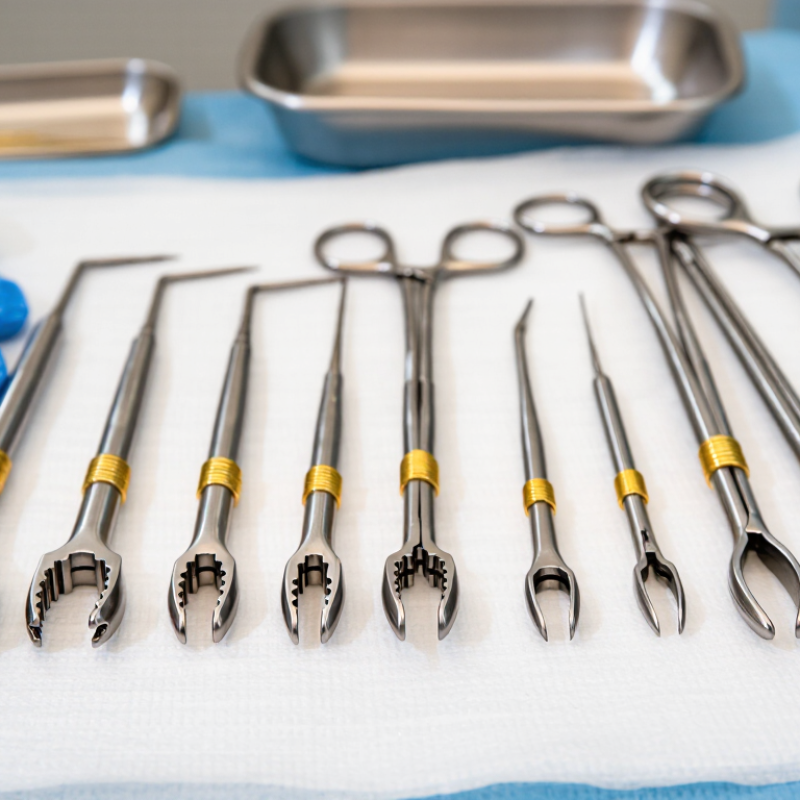
Needle holder selection starts with jaw mechanics, not appearance. The ten most useful configurations usually include Mayo-Hegar, Olsen-Hegar, Mathieu, Castroviejo, delicate, heavy-duty, angled, pediatric, laparoscopic, and tungsten-carbide-insert types. Each design changes grip, visibility, and suture control.
Mayo-Hegar models suit general closure work. Castroviejo holders offer finer control for microsurgery. Mathieu patterns open with spring tension, which can reduce finger movement during repeated passes. Serrated jaws improve needle stability, while cross-hatching adds stronger rotational control. Smooth jaws may protect delicate needles, but they can slip under higher force. That trade-off matters.
ISO 7153-1 focuses on metallic materials used in surgical instruments, including material suitability and corrosion resistance. It does not, by itself, approve a jaw pattern or guarantee needle retention. Buyers should request material declarations, surface-finish data, hardness information, and test methods. AISI 420-type stainless steel is common for rigid surgical components, while harder inserts may improve wear resistance. The exact grade still needs verification.
Grand View Research estimated the global surgical instruments market at about USD 14.5 billion in 2023, with continued growth forecast through 2030. That expansion increases supplier variety, but not necessarily quality. The World Health Organization reports that billions of people still lack access to safe, affordable surgical care. Cost matters, yet unreliable jaws create hidden costs through damaged needles, repeated procedures, and maintenance. I would not rank a holder by price alone. A catalog photo is never enough.
The top ten needle holders were compared through five practical metrics: grip security, jaw precision, needle control, hand comfort, and durability. The selection included standard curved, fine curved, heavy curved, tungsten-insert, ratcheted, non-ratcheted, micro, long-shaft, angled, and compact designs. Each type serves a different surgical need.
Grip security matters when a needle enters dense tissue. Heavy curved and tungsten-insert jaws usually provide firm holding power. Fine curved and micro holders offer better precision in narrow fields. Long-shaft models improve access, but they can reduce hand feedback. That trade-off deserves attention.
Needle control depends on jaw alignment, hinge smoothness, and locking consistency. A loose ratchet can disturb a delicate stitch.
Ergonomics also affects performance during long procedures. Balanced handles reduce finger pressure and wrist fatigue. Compact designs feel quicker, though some provide less leverage.
Durability depends on hinge construction, jaw wear, cleaning compatibility, and repeated sterilization. In practical inspections, even a strong holder can fail expectations if its jaws close unevenly.
My ranking would change for microsurgery, trauma repair, or routine closure. No single design wins every metric. Careful users should test the holder with actual suture sizes and gloved hands before wider purchasing.
Mayo-Hegar, Olsen-Hegar, Crile-Wood, and seven other leading needle-holder designs serve different surgical needs. Mayo-Hegar offers strong, dependable jaws for heavier needles and firm tissue closure. Olsen-Hegar combines needle holding with integrated scissors, saving instrument changes during demanding procedures. Crile-Wood provides slimmer jaws and more controlled handling for delicate sutures.
Mathieu holders use a spring handle, supporting quick, repeated passes with less finger movement. Castroviejo designs suit microsurgical work, where a narrow tip and precise wrist control matter. Ryder and Webster patterns support fine sutures, but their jaw length and grip feel different in practice. Derf, Gillies, and Halsey holders can also fit specialized closure tasks, depending on access and needle size.
Global buyers should examine jaw alignment under bright light. Even a small gap can reduce needle control. Test the ratchet with gloved hands, because a stiff lock becomes tiring during long procedures. Check tungsten-carbide inserts, hinge smoothness, surface finish, and cleaning compatibility. Reusable instruments need clear maintenance records and dependable quality inspection.
A ranking is never absolute. A surgeon preferring a light Mathieu may reject a heavier Mayo-Hegar. My own evaluation would include several suture sizes, not one sample. That detail is easy to overlook. The best choice balances control, durability, ergonomics, and local sterilization conditions rather than relying on a familiar design name.
For global buyers, the “top 10” needle holders should be judged by compliance, not appearance alone. Common choices include Mayo-Hegar, Olsen-Hegar, Crile-Wood, Mathieu, Ryder, Castroviejo, micro, laparoscopic, angled, and self-locking designs. Each model needs documented material control, dimensional inspection, jaw alignment, and corrosion testing. ISO’s ISO Survey 2022 recorded more than 34,000 ISO 13485 certificates worldwide, showing how widely quality systems influence medical-device sourcing. Still, certification alone proves little about one instrument.
Under EU MDR 2017/745, reusable surgical instruments require clear technical documentation, risk management, labeling, and validated reprocessing instructions. Buyers should check the device classification, intended use, UDI strategy, and post-market surveillance records. Under FDA 21 CFR 820, the Quality Management System Regulation became effective on February 2, 2026, incorporating ISO 13485:2016 requirements. Supplier files should therefore connect design inputs, verification results, process controls, complaint handling, and corrective actions. This connection is often weak.
A practical audit should inspect ten samples from different production batches. Check the ratchet engagement, tip symmetry, surface finish, and sterilization instructions. A polished jaw is not proof of safety. Neither is a complete-looking certificate. The European Commission’s MDR implementation guidance repeatedly emphasizes evidence-based documentation and lifecycle control. Buyers may still miss small gaps, especially translated labels or changing subcontractors. That deserves reflection. Reliable sourcing means reviewing records, testing performance, and confirming that compliance survives real clinical handling.
For global buyers, the best needle holder is not simply the cheapest or sharpest. Its value depends on safe processing, reliable handling, and predictable service life. AAMI ST79 emphasizes effective cleaning, inspection, packaging, sterilization, storage, and documentation. These steps should guide every purchasing decision.
Choose needle holders with smooth hinges, stable jaws, and surfaces that are easy to clean. Hinged instruments need full opening during cleaning. Blood or tissue can remain inside the joint. That small detail matters. Inspect the jaw alignment, ratchet function, corrosion marks, and insulation after each processing cycle. A damaged instrument should leave service, even when it still appears usable. It may fail during delicate closure.
Tips: Request cleaning and sterilization instructions before purchase. Confirm steam compatibility, validated cycle parameters, and local compliance requirements. Track usage, repairs, failed inspections, and replacement dates. A simple lifecycle record can reveal which of the top ten designs truly saves money. Avoid comparing purchase prices alone. Repeated repairs, slow inspection, and premature replacement can quietly increase costs. AAMI ST79 does not replace facility procedures or regulatory advice, and requirements may differ between countries. That is easy to overlook. Also, not every “stainless” surface performs equally after frequent exposure to moisture, chemicals, and heat. Use documented material information, practical testing, and staff feedback before making a final selection.
Start with jaw mechanics, not appearance. Check grip, alignment, ratchet engagement, and control with gloved hands. Catalog photos are insufficient.
Serrated jaws can improve stability during closure. Cross-hatching strengthens rotational control. Smooth jaws may protect delicate needles but can slip under pressure.
General-purpose patterns support firm closure. Spring-handle patterns reduce finger movement. Fine-tip patterns suit delicate sutures and restricted visibility. No pattern wins universally.
Request material declarations, hardness information, surface-finish data, and corrosion-test methods. Confirm the exact steel grade. “Stainless” alone is too vague.
Inspect samples from several production batches. Hold each jaw under bright light. Look for gaps, uneven tips, rough hinges, and faulty locks.
It addresses metallic materials used in surgical instruments, including suitability and corrosion resistance. It does not approve every jaw pattern or guarantee retention.
Review technical files, risk management, labeling, reprocessing instructions, and quality-system records. Confirm complaint handling and corrective-action procedures. Certificates are not enough.
Compare needle damage, maintenance needs, sterilization compatibility, and expected service life. A cheaper holder may create hidden costs. I would test several suture sizes, not one.
This guide explains how Needle Holders are designed, evaluated, and selected for different surgical applications. It examines common types and jaw mechanisms in relation to ISO 7153-1, then compares ten leading design categories using five practical performance metrics: grip security, needle control, ergonomic comfort, precision, and durability. The discussion covers widely used configurations such as standard ratcheted, integrated cutting, fine-jaw, and heavy-duty patterns without promoting any specific manufacturer or brand.
It also outlines key purchasing considerations for global buyers, including quality management under ISO 13485, market requirements associated with EU MDR 2017/745, and relevant FDA 21 CFR 820 principles. Finally, the guide considers sterilization compatibility, inspection, maintenance, and total lifecycle value under AAMI ST79 guidance, helping healthcare organizations assess reliability, reprocessing demands, and long-term operating costs before making procurement decisions.

Carna Medicial Technology