Choosing reliable Surgical Spatulas manufacturers requires more than comparing polished catalogs or low prices. Surgeons and procurement teams examine blade geometry, balance, surface finish, grip comfort, and compatibility with sterilization cycles. Small details matter. A poorly finished edge can catch tissue or create cleaning concerns. A handle that feels secure during delicate retraction may reduce fatigue during long procedures.
As surgeon and patient-safety authority Atul Gawande observed, “The volume and complexity of what we know has exceeded our individual ability to deliver its benefits properly.” His observation applies to instrument sourcing. Buyers must connect clinical experience with documented manufacturing evidence. This guide reviews China’s leading Surgical Spatulas manufacturers and suppliers through product range, material selection, quality systems, customization capability, export experience, and after-sales support. Attention is also given to stainless steel grades, reusable and disposable designs, inspection procedures, traceability, and applicable regulatory documentation.
No ranking is perfect. Supplier information changes. Some companies present strong technical claims but provide limited public evidence. That gap deserves reflection. A dependable evaluation should include factory communication, sample testing, sterilization validation, and careful review of certificates. Practical feedback from surgeons, nurses, and central sterile-service teams can reveal problems that brochures never show. The companies discussed here are therefore considered from a purchasing and clinical-use perspective, not from marketing language alone. The goal is a clearer shortlist for hospitals, distributors, and medical-device buyers seeking safe, consistent, and fit-for-purpose Surgical Spatulas.
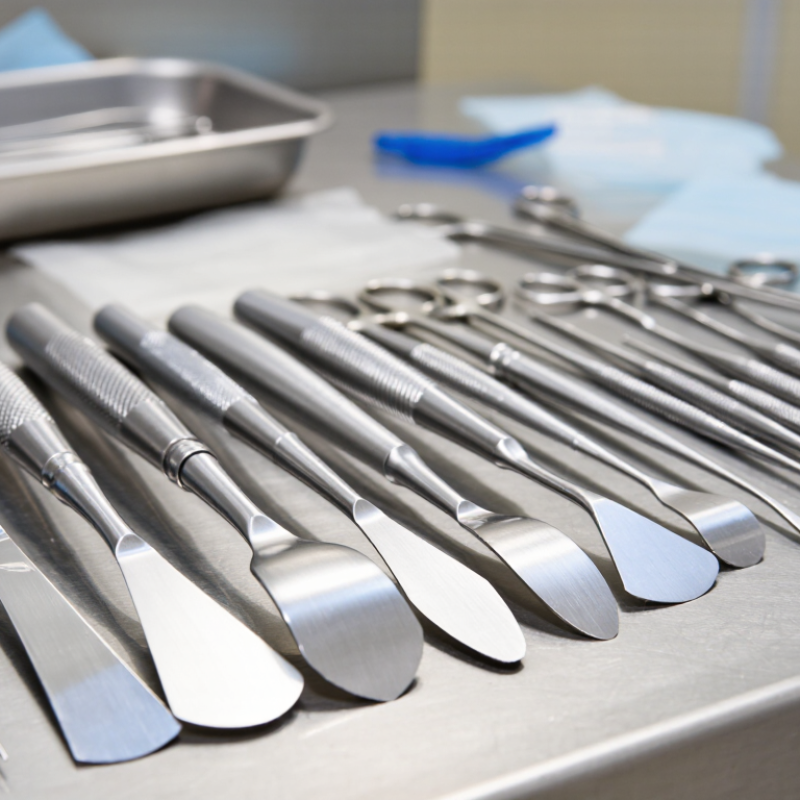
Surgical spatulas are slim, flat instruments used to lift, separate, spread, or gently hold tissue during procedures. Their rounded edges help reduce accidental pressure on delicate surfaces. Some models are stainless steel, while others use specialized polymers for specific clinical needs. Shape, width, flexibility, and surface finish affect control. A narrow spatula may support precise dissection, while a broader one can protect tissue or improve visibility.
In practice, clinicians select a spatula according to the procedure, anatomical area, and required pressure. It should feel balanced in the hand and remain stable during careful movement. Reusable instruments must follow validated cleaning, inspection, packaging, and sterilization procedures. Disposable types require secure packaging and clear usage instructions. A small scratch can matter. I have found that even familiar instruments deserve inspection before use, because smooth handling can hide subtle damage.
Tips: Choose an edge that matches the tissue’s sensitivity. Check for bends, cracks, corrosion, or rough surfaces before the procedure. Keep the handle dry for reliable control. Never force a spatula into a narrow space; adjust the angle instead. After cleaning, inspect the tip under strong light. Manufacturer instructions and facility protocols should guide sterilization decisions. Specifications can vary, and assuming they are identical is an easy mistake. Suppliers should provide traceable documentation, material details, and quality records.
Surgical spatulas are flat, smooth-ended instruments used to gently retract, separate, protect, elevate, or manipulate soft tissue and organs during an operation. The specifications below describe ten commonly supplied surgical spatula configurations without identifying any company or brand.
| No. | Surgical Spatula Configuration | Primary Surgical Application | Blade or Tip Design | Common Material | Typical Size Range | Reusable or Disposable | Common Sterilization Route | Important Procurement Checks |
|---|---|---|---|---|---|---|---|---|
| 1 | Neurosurgical Brain Spatula | Gentle retraction and protection of brain tissue during cranial and intracranial procedures. | Thin, smooth, rounded rectangular blade with a firm shank and ergonomic handle. | Medical-grade stainless steel, commonly austenitic stainless steel. | Blade widths commonly range from approximately 8–25 mm; length varies by access depth. | Usually reusable; sterile single-use versions are also available. | Steam autoclave for compatible reusable models; single-use models are supplied sterile and are not reprocessed. | Check atraumatic edges, surface finish, blade rigidity, corrosion resistance, and dimensional consistency. |
| 2 | Flexible Brain Spatula | Controlled tissue retraction where the surgeon needs to adjust the blade angle during neurosurgery. | Thin, slightly flexible blade that can be shaped or positioned according to the operative field. | Spring-tempered stainless steel or other surgical-grade metal designed for controlled flexibility. | Common blade widths are approximately 10–30 mm, with several available lengths. | Generally reusable. | Steam sterilization after cleaning and inspection, following the instrument manufacturer’s validated instructions. | Evaluate elastic recovery, resistance to permanent deformation, edge smoothness, and fatigue performance. |
| 3 | Micro-Neurosurgical Spatula | Fine manipulation and protection of delicate structures in microsurgery and minimally exposed operative fields. | Very narrow, slim blade with a polished atraumatic tip and precise control handle. | Stainless steel or titanium; titanium is valued where low weight and MRI compatibility are required. | Blade widths commonly range from approximately 2–8 mm. | Reusable or sterile single-use, depending on the surgical system. | Steam autoclave for validated reusable designs; some disposable models use ethylene oxide or radiation sterilization. | Check tip alignment, burr-free edges, microscopic surface finish, handle balance, and packaging integrity. |
| 4 | Ophthalmic Spatula | Manipulation of ocular tissues and assistance with delicate procedures involving the anterior or posterior eye. | Small, highly polished, rounded blade or paddle designed to minimize tissue trauma. | Stainless steel, titanium, or medical-grade polymer for selected disposable designs. | Tip widths often range from approximately 1–5 mm, depending on the procedure. | Both reusable and sterile single-use formats are common. | Validated steam sterilization for reusable metal instruments; disposable products are supplied sterile. | Confirm tip smoothness, optical-field compatibility, corrosion resistance, and absence of loose coatings or particles. |
| 5 | Dental Surgical Spatula | Retraction, tissue separation, graft handling, and access assistance in oral and maxillofacial surgery. | Flat or gently curved paddle with rounded edges and a handle suitable for controlled intraoral work. | Stainless steel, sometimes with a silicone or polymer grip. | Blade widths commonly range from approximately 5–20 mm. | Primarily reusable; sterile disposable models are available for selected procedures. | Steam autoclave for reusable instruments after thorough cleaning. | Check resistance to repeated autoclave cycles, grip security, working-end polish, and compatibility with dental instrument washers. |
| 6 | ENT and Rhinoplasty Spatula | Retraction and elevation of nasal, sinus, oral, and other soft tissues during ear, nose, and throat procedures. | Flat, curved, or offset blade designed to improve visibility in confined anatomical spaces. | Medical-grade stainless steel; some specialized versions use titanium. | Blade widths commonly range from approximately 6–18 mm, with multiple working lengths. | Usually reusable. | Steam autoclave when validated for the specific instrument. | Assess blade curvature, handle ergonomics, atraumatic margins, resistance to staining, and ease of cleaning. |
| 7 | Plastic or Polymer Surgical Spatula | Gentle tissue spreading, implant handling, medication or material placement, and procedures where metal contact is undesirable. | Lightweight flat paddle with smooth, rounded edges; may be rigid or semi-flexible. | Medical-grade polypropylene, polycarbonate, PEEK, or another validated biocompatible polymer. | Common working widths range from approximately 5–30 mm. | Most are single-use; reusable polymer products require specific validated reprocessing instructions. | Ethylene oxide, radiation, or other validated terminal sterilization methods for disposable products. | Verify biocompatibility, chemical resistance, dimensional stability, radiopacity requirements, and packaging sterility. |
| 8 | Gynecological or Obstetric Spatula | Soft-tissue retraction and assistance with exposure during gynecological and obstetric procedures. | Broad, smooth, rounded blade that may be curved or offset for anatomical access. | Stainless steel for reusable products; medical-grade polymer for many disposable products. | Blade widths commonly range from approximately 15–35 mm, depending on the intended application. | Reusable and sterile single-use configurations are available. | Steam sterilization for compatible reusable models; disposable models are supplied sterile. | Check atraumatic contours, working length, handle control, material compatibility, and validated cleaning or sterilization claims. |
| 9 | Laparoscopic or Endoscopic Spatula | Retraction, dissection assistance, and manipulation of tissue through a laparoscopic or endoscopic access route. | Narrow spatula tip mounted on a long shaft; may be rigid, angled, or articulating. | Stainless steel shaft and tip with insulated polymer components where electrosurgical compatibility is required. | Working lengths commonly range from approximately 250–450 mm; tip widths often range from 5–15 mm. | Reusable or sterile single-use. | Validated steam sterilization for reusable instruments; disposable versions use a validated terminal sterilization process. | Confirm shaft diameter, insulation integrity, articulation performance, jaw or tip alignment, and compatibility with the intended trocar. |
| 10 | General Soft-Tissue Spatula | General-purpose tissue retraction, organ protection, wound exposure, and separation of tissue planes. | Broad flat paddle with straight or gently curved profile and rounded atraumatic edges. | Medical-grade stainless steel; titanium is used for lightweight specialty designs. | Blade widths commonly range from approximately 10–40 mm, with short, medium, and long handles. | Most commonly reusable. | Steam autoclave after validated cleaning, rinsing, drying, inspection, and packaging procedures. | Review working-end dimensions, handle comfort, balance, weld or joint quality, passivation, and resistance to repeated sterilization. |
Note: Size ranges are representative purchasing ranges rather than universal specifications. Final dimensions, materials, sterilization methods, and intended uses should be confirmed in the supplier’s technical documentation and applicable regulatory submissions.
Request ISO 13485:2016 certification, material certificates, inspection records, and batch traceability. A polished certificate is not enough.
316L stainless steel offers corrosion resistance during repeated sterilization. Check the exact material grade, not just “medical steel.”
Order samples from two production batches. Measure blade thickness, handle balance, surface roughness, and dimensional tolerance.
Smooth edges, balanced weight, suitable curvature, and a secure grip support controlled handling under bright operating-room lights.
Ask for risk-management records, cleaning validation, sterilization compatibility, and biocompatibility evidence. The documents should match the actual manufacturing site.
Common options include blade curvature, handle length, laser marking, and private packaging. Too much customization can delay verification.
Review export experience, inspection frequency, defect records, and corrective actions. A strong sample proves little about repeated volume.
No. Video audits show processes, but independent inspection can reveal hidden inconsistencies. I might miss something too.
Confirm tolerances, packaging, labeling, sterilization compatibility, replacement terms, shipping protection, and delivery delays in writing.
Compare at least three suppliers using the same technical checklist. No checklist catches everything.
This article provides a practical overview of Surgical Spatulas, including their common designs, materials, and applications in tissue handling, exposure, separation, and other surgical procedures. It explains how different shapes, blade edges, handle structures, and sizes can support precision, visibility, and control during operations. Readers will also learn about the main factors used to evaluate Chinese manufacturers and suppliers, such as production experience, material consistency, manufacturing capabilities, quality management, delivery reliability, and after-sales communication.
The article introduces ten leading types of Chinese suppliers without focusing on brand promotion and compares their strengths in product quality, customization, packaging, and technical support. It also discusses essential certification and inspection expectations, including traceability, sterilization compatibility, dimensional accuracy, surface finishing, and compliance with applicable medical-device requirements. Finally, it offers practical guidance for selecting a suitable supplier by reviewing samples, confirming specifications, assessing production capacity, checking documentation, and establishing clear requirements for pricing, lead times, quality control, and long-term cooperation.

 Carna Medicial Technology