Why Choose Surgical Hooks for Global Procurement?

Time:2026-09-24 Author:Liam
0%

Choosing Surgical Hooks for global procurement involves more than comparing unit prices. It requires confidence in design, materials, manufacturing controls, and supplier communication. In operating rooms, a hook must provide stable handling without causing unnecessary tissue trauma. Small details matter, such as a balanced grip, a smooth surface, and a tip shaped for its intended procedure.

Experienced procurement teams examine technical drawings, material certificates, inspection records, and product samples. They may also request evidence of quality management systems and traceability throughout production. A dependable supplier can explain where materials originate, how batches are identified, and how defects are handled. Clear documentation supports responsible purchasing across different healthcare markets.

Practical testing remains essential. Surgeons and sterile processing staff can reveal issues that catalogs often miss. A handle may feel secure during a short demonstration but become tiring during extended use. Packaging should also protect the instrument from scratches, moisture, and contamination risks during transport. These details influence safety, workflow, and long-term value.

No supplier is perfect. Even a well-controlled factory may face delays, material variations, or communication gaps. That reality deserves honest evaluation. Procurement decisions should include corrective-action procedures, replacement policies, and responsive technical support. Buyers should also confirm applicable regional requirements before import and clinical use.

The strongest global partnerships are built gradually. They combine verified quality with practical experience and transparent communication. Surgical Hooks then become more than catalog items. They become reliable tools within a carefully managed surgical supply chain.
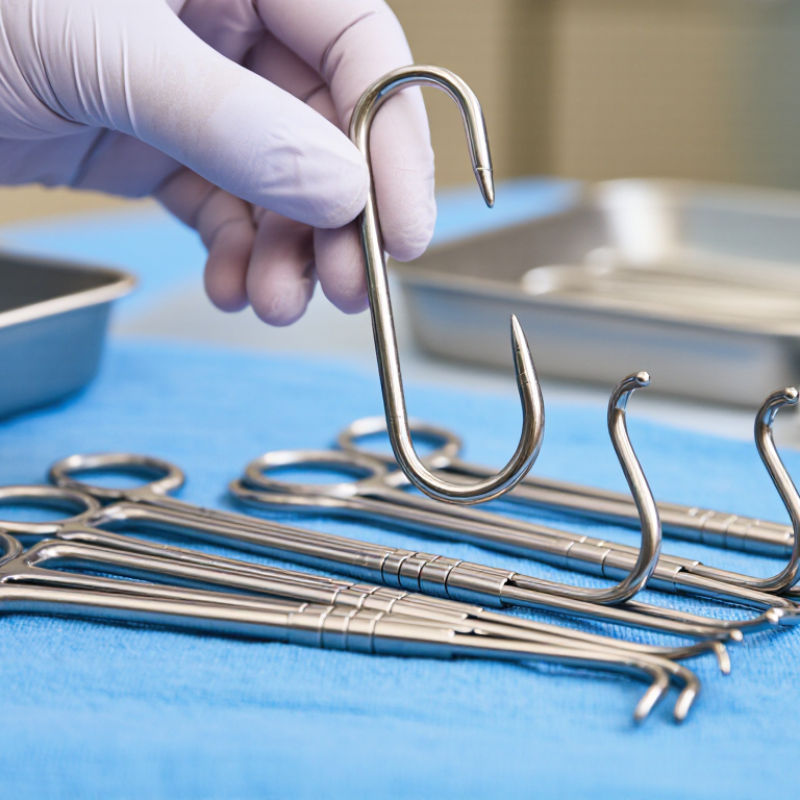
Why Choose Surgical Hooks for Global Procurement?

What Are Surgical Hooks and How Are They Used?

Surgical hooks are compact instruments designed to lift, hold, or gently retract tissue during procedures. Their tips may be sharp, blunt, single-ended, or double-ended. Selection depends on the tissue, incision depth, and required visibility. A delicate hook can expose a narrow field without occupying a surgeon’s hand. Larger hooks may support skin edges or dense tissue. Small details matter.

In practice, surgical hooks are used in general surgery, orthopedics, dermatology, and other controlled clinical settings. A clinician places the hook with measured pressure, then adjusts it as the tissue changes. Sharp hooks require careful handling near vessels, nerves, and fragile structures. Blunt designs can be preferable when controlled retraction is more important than penetration. They are not universal tools. Training matters.

For global procurement, buyers should verify material grade, surface finish, tip geometry, dimensional consistency, and compatibility with the facility’s validated cleaning process. Stainless steel is common, but performance depends on composition and manufacturing quality. Ask for inspection records, sterilization instructions, packaging details, and traceability documents. Requirements vary by jurisdiction, so local regulatory review remains essential. A low purchase price may conceal inconsistent machining or weak documentation. No checklist is perfect. Careful sampling, clinical feedback, and lot-based inspection can reveal problems before routine use.

Why Choose Surgical Hooks for Global Procurement?

Surgical hooks are handheld instruments with one or more pointed or blunt working ends. They are used to lift, retract, position, or separate tissue during procedures. The chart shows common representative prong configurations used when selecting hooks for different access and retraction requirements.

More prongs can provide broader tissue engagement, while single-prong designs are commonly selected when precise, localized control is required. Final selection should follow the procedure, tissue type, instrument material, cleaning method, and manufacturer’s validated instructions for use.

Which Features Define High-Quality Surgical Hooks?

Why Choose Surgical Hooks for Global Procurement?

Which Features Define High-Quality Surgical Hooks?

High-quality surgical hooks begin with dependable materials and controlled manufacturing. Medical-grade stainless steel should resist corrosion, repeated sterilization, and surface wear. The hook’s tip needs precise shaping, not excessive sharpness. It must engage tissue securely while reducing unnecessary trauma. A balanced handle also improves control during delicate procedures. In practical evaluations, even small grip differences can affect handling under wet conditions. A smooth, uniform finish supports cleaning and helps prevent residue buildup. However, a polished surface alone does not prove quality. Buyers should review hardness data, dimensional tolerances, and inspection records.

Tips: Request material certificates, sterilization compatibility data, and batch-level traceability. Check whether the hook remains stable after repeated autoclave cycles. Examine the connection between the shaft and handle carefully. Weak joints may appear acceptable during visual inspection. They can fail under pressure. Packaging should protect the tip from bending and contamination during international transport. Clear labeling also reduces receiving errors across different procurement teams.

Reliable suppliers should provide consistent samples, documented quality controls, and responsive technical support. Independent testing can strengthen confidence when specifications are unclear. Procurement teams should compare total service life, not only the unit price. A cheaper hook may require earlier replacement or create handling concerns. I have found that real-world feedback sometimes reveals issues missed by factory checks. That is why evaluation should include surgeons, sterilization staff, and purchasing specialists. Small design compromises are easy to overlook. They still deserve careful review.

Why Choose Surgical Hooks for Global Procurement?

Global procurement of surgical hooks calls for more than comparing unit prices. Buyers need clear specifications for hook shape, dimensions, material, surface finish, and intended use. A small difference in curvature can affect handling or compatibility with a procedure set. Request drawings, material documentation, and inspection records before approving a supplier. Details matter.

Reliable sourcing also depends on repeatable production and traceability. Ask how each lot is identified, inspected, and protected from damage during shipping. Packaging should keep components clean and prevent hooks from shifting or rubbing against one another. For cross-border orders, confirm lead times, storage conditions, and required documentation with qualified procurement and quality teams. Requirements vary by market, so assumptions can cause delays.

Samples can reveal issues that a specification sheet misses. Inspect edges, finish, dimensions, and packaging under consistent conditions, then record the results. Supplier audits and periodic incoming checks may help identify changes between production lots. Still, no process removes every risk; even careful teams can overlook a minor variation. That is worth admitting. Build realistic inspection time into purchasing plans, and agree on a clear process for handling defects, documentation gaps, or late deliveries before placing larger orders.

Why Choose Surgical Hooks for Global Procurement?

Procurement Comparison of Common Surgical Hook Categories
Procurement Dimension Common Surgical Hook Category Typical Clinical Application Common Material Reusable or Single-Use Key Procurement Considerations
Basic tissue retraction Single-prong hook Retraction and controlled positioning of soft tissue during open procedures Medical-grade stainless steel or other validated surgical metal Commonly reusable; sterile single-use versions are also available Tip sharpness, atraumatic handling, corrosion resistance, surface finish, and handle ergonomics
Broad-area retraction Multi-prong hook Retraction of wider tissue areas where several contact points are required Medical-grade stainless steel Usually reusable, depending on the validated product design Prong alignment, resistance to deformation, cleaning access, and compatibility with the intended procedure
Delicate tissue handling Blunt hook Gentle tissue retraction when minimizing the risk of puncture is important Medical-grade stainless steel or validated polymer components Reusable or single-use Tip geometry, atraumatic performance, material biocompatibility, and secure grip
Precise tissue separation Sharp hook Localized retraction or controlled engagement with firm tissue Hardened surgical stainless steel or other validated metal alloy Primarily reusable; single-use sterile options may be specified Tip integrity, resistance to bending, edge or point consistency, and protective packaging
Minimally invasive access Long-shaft hook Access through a small incision or specialized surgical access route Medical-grade stainless steel with a validated shaft design Reusable or sterile single-use Shaft rigidity, working length, handle balance, dimensional consistency, and packaging protection
Instrument control Ring-handle hook Procedures requiring stable finger control and precise retraction Medical-grade stainless steel Commonly reusable Handle comfort, finger-ring dimensions, locking or non-locking design, and cleaning validation
Product standardization Procedure-specific set Consistent instrument selection across hospitals, operating rooms, or regional facilities Validated surgical-grade materials selected for the complete set Reusable sets or sterile single-use kits Uniform specifications, instrument identification, set configuration, traceability, and replacement planning
Global quality control Regulated medical device Procurement for hospitals and distributors operating under medical-device regulations Materials documented for intended clinical use and biocompatibility Reusable or single-use, according to the validated intended use Quality-management documentation, risk management, labeling, instructions for use, batch traceability, and conformity with applicable local regulations
Reprocessing requirements Reusable instrument Repeated use following cleaning, disinfection, inspection, packaging, and sterilization Corrosion-resistant surgical stainless steel is commonly used Reusable Validated reprocessing instructions, resistance to repeated sterilization cycles, inspection criteria, and expected service life
Infection-control logistics Sterile single-use instrument Procedures prioritizing ready-to-use sterile supply and simplified reprocessing workflow Validated metal, polymer, or combined materials Single-use Sterility assurance, package integrity, expiry-date control, storage conditions, and disposal requirements

Procurement specifications should be verified against the intended clinical application, applicable national medical-device regulations, validated reprocessing instructions, and the product’s technical documentation. Material selection and sterilization compatibility must be confirmed for each individual instrument design.

How Do Buyers Evaluate Suppliers and Product Compliance?

Global procurement of surgical hooks demands more than a competitive price. Buyers must examine supplier capability, product compliance, and evidence supporting every claim. When evaluating a supplier, request a current quality certificate, manufacturing address, and controlled product specifications. Check whether the certificate covers the actual production site and relevant device category. Review material grades, dimensions, surface finish, load performance, and packaging details. These details affect handling, tissue contact, storage, and clinical consistency.

A reliable supplier should provide batch records, inspection reports, and traceability from raw material to shipment. Ask how nonconforming products are isolated. That answer often reveals operational maturity. Do not treat a polished document as proof. Documents can be outdated, incomplete, or poorly matched. Ideally, buyers compare samples against drawings and approved specifications. An independent review may expose small deviations before they become costly. Still, no checklist removes every risk. Human judgment matters. Even experienced teams can overlook a missing revision or unclear test method.

Tips: Request samples, verify dimensions with calibrated tools, and confirm sterile or non-sterile status before ordering. Keep written approval records. Clarify change-notification procedures, complaint handling, and replacement terms. For multiple markets, map each destination’s documentation needs before production. This step is easy to postpone, yet delays often begin there. A supplier may meet one market’s expectations while missing another’s.

What Factors Affect Cost, Delivery, and Supply Reliability?

Why Choose Surgical Hooks for Global Procurement?

The cost of surgical hooks extends beyond the quoted unit price. Material grade, hook geometry, surface finish, and production volume all influence the final figure. A low quote can be misleading. Tooling, inspection, sterile packaging, freight, customs charges, and local storage may add significant costs. Procurement teams should request a complete cost breakdown and compare equivalent specifications. Small changes in wire diameter can also affect strength, handling, and yield during production.

Delivery reliability depends on realistic lead times and clear production planning. Ask whether the supplier maintains capacity for repeat orders, not only samples. Confirm approval timelines, packaging requirements, documentation, and shipping routes before placing an order. A shipment can leave on schedule yet arrive late because documents are incomplete. Buffer stock may protect hospitals from short interruptions, but excess inventory can create expiry or cash-flow concerns. It is a trade-off.

Supply reliability requires more than a polished sales response. Review quality procedures, lot traceability, inspection records, and change-control practices. Independent audits can reveal differences between written procedures and factory habits. Suppliers should explain how they manage material shortages, equipment failure, and sudden demand increases. A written contingency plan matters. It may still fail under pressure. Regular performance reviews using defect rates, on-time delivery, and response times provide more dependable evidence than promises.

FAQS

What materials should high-quality surgical hooks use?

Medical-grade stainless steel should resist corrosion, sterilization, and surface wear. Request material certificates. Confirm the grade matches the intended clinical use.

How should the hook tip be designed?

The tip should engage tissue securely without unnecessary sharpness. Precise shaping matters. Small edge differences can affect control and tissue handling.

Why does handle balance matter?

A balanced handle improves control during delicate procedures. Grip performance may change when gloves or surfaces are wet. Test it under realistic conditions.

Which quality records should buyers request?

Ask for hardness data, dimensional tolerances, inspection records, and batch traceability. Samples are useful. Factory documents can still miss small variations.

How can buyers assess sterilization durability?

Check whether the hook remains stable after repeated autoclave cycles. Inspect the tip, finish, shaft, and handle connection. Weak joints may fail under pressure.

What should packaging protect during international shipping?

Packaging should prevent bending, contamination, and contact damage. Hooks should not shift or rub together. Clear labels can reduce receiving errors.

Which costs should procurement teams compare?

Compare more than the unit price. Include tooling, inspection, packaging, freight, customs, and storage. A cheaper hook may need earlier replacement.

How can buyers improve supply reliability?

Review lot traceability, quality procedures, change controls, and production capacity. Confirm lead times and required documents. A written contingency plan helps, but it may still fail.

Why are samples and audits important?

Samples can reveal finish, edge, dimension, or packaging problems. Audits may expose gaps between written procedures and factory habits. No process is perfect.

What should happen before placing a large order?

Agree on defect handling, documentation gaps, late deliveries, and inspection timing. Record sample results under consistent conditions. Real-world feedback deserves attention, too.

Conclusion

Surgical Hooks are specialized medical instruments used to gently retract, lift, or hold tissue during surgical procedures, helping clinicians maintain a clear and stable working field. Their designs may vary by shape, tip configuration, handle style, and intended application. For global procurement, high-quality Surgical Hooks should offer reliable strength, corrosion resistance, precise finishing, secure handling, and compatibility with appropriate sterilization processes. Consistent dimensions and smooth surfaces are also essential for safe and efficient use.

Buyers should evaluate suppliers through product specifications, quality-management practices, inspection procedures, documentation, and compliance with applicable medical-device requirements in the destination market. Cost is influenced by materials, manufacturing complexity, customization, packaging, and order volume, while delivery performance depends on production capacity, inventory planning, logistics, and communication. A reliable procurement strategy balances product quality, regulatory documentation, total cost, lead time, and supply continuity rather than focusing only on the lowest purchase price.

Liam

Liam

Liam is a dedicated marketing professional with a profound expertise in the industry, where he excels at highlighting the unique advantages of our core products. With a keen understanding of market trends and consumer needs, Liam frequently updates our company’s professional blog, providing......