Global buyers are examining Ultrasonic Handpieces more carefully than ever. Their decisions affect treatment precision, workflow speed, maintenance costs, and patient comfort. A handpiece may look impressive in a product photograph, yet its real value appears under daily clinical pressure.
Dr. Tomaso Vercellotti, a recognized pioneer of piezoelectric dental surgery, described the technology as “a new technique for bone surgery, based on the use of modulated ultrasonic frequency.” His observation remains relevant for buyers comparing modern systems. Controlled vibration can support precise cutting, reduced heat generation, and improved visibility during delicate procedures. However, performance depends on more than the generator. Tip design, irrigation delivery, vibration stability, grip comfort, and sterilization compatibility all require careful review.
From practical purchasing experience, reliable Ultrasonic Handpieces should withstand repeated cleaning cycles without losing balance or output. Buyers should request test data, warranty terms, spare-part availability, and technical support in their region. Compatibility matters too. A handpiece that fits one generator may not work safely with another. Small details matter.
No purchase is flawless.
Some manufacturers emphasize power while overlooking ergonomics. Others promote low prices but provide limited service documentation. Global buyers should compare verified specifications with feedback from clinicians and biomedical technicians. Certifications also deserve independent confirmation, rather than simple website claims. The strongest choice is not always the newest model. It is the handpiece that delivers consistent clinical performance, transparent support, and predictable ownership costs across different healthcare environments.
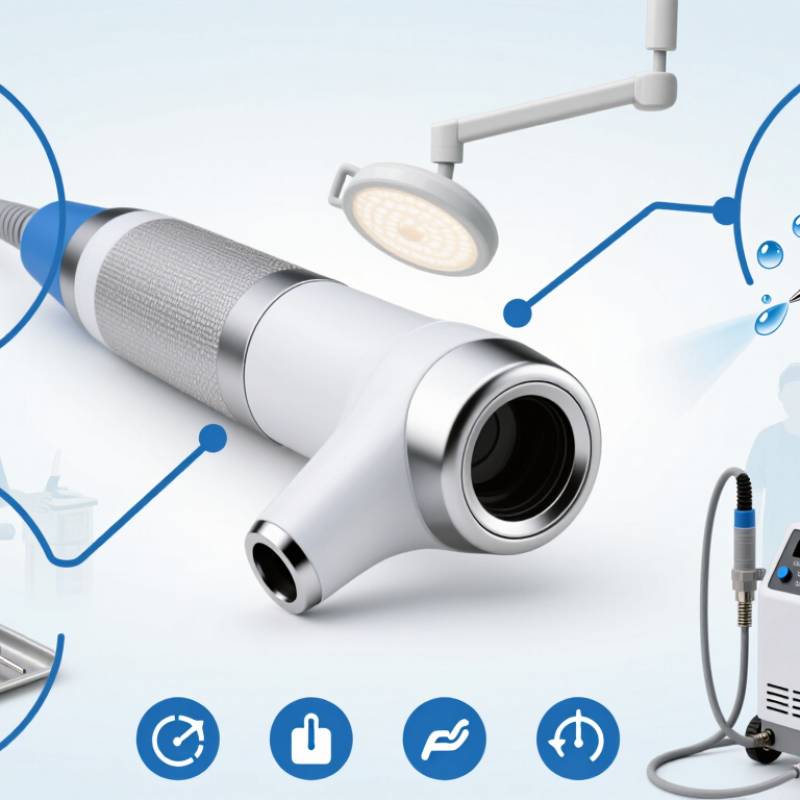
Why Choose Ultrasonic Handpieces for Global Buyers?
An ultrasonic handpiece converts electrical energy into mechanical vibration, commonly between 20 and 40 kHz. The working tip moves thousands of times per second. When irrigation fluid reaches the vibrating tip, it creates microstreaming and controlled cavitation. These forces loosen deposits from narrow surfaces and help disrupt soft tissue with limited direct pressure. The effect feels precise, but it is not magic. Tip design, contact angle, power, and fluid flow all change the result.
In practical use, experienced operators begin with moderate power and short working strokes. A thin film of water should remain around the tip. Without enough cooling, heat can build quickly. With excessive pressure, vibration becomes less efficient and surface damage may increase. Tissue response also varies between patients and procedures. This is where training matters. A handpiece can provide energy, but it cannot replace clinical judgment or validated operating instructions. I have found that small adjustments often matter more than maximum output.
Tips: Check the generator’s frequency range and compatibility before purchasing. Inspect the tip for wear, because a damaged tip may vibrate unevenly. Use documented cleaning and sterilization procedures. Test cooling performance before extended operation. Record power settings during evaluations; memory can be unreliable. A quieter handpiece may feel better, but acoustic comfort alone does not prove better clinical performance.
Why Choose Ultrasonic Handpieces for Global Buyers?
Frequency and tip amplitude reveal more than a catalogue headline. A 25–40 kHz handpiece completes 25,000–40,000 cycles each second. At 30 kHz and 10 μm peak amplitude, calculated tip velocity reaches about 1.9 m/s. At 40 kHz and 100 μm, it approaches 25.1 m/s. These figures come from v = 2πfA, using peak amplitude. Measurement definitions can differ.
IEC 61847 requires manufacturers to measure and declare essential ultrasonic output characteristics. Buyers should request amplitude under load, not only unloaded laboratory values. A technical review in the Journal of Medical Ultrasonics also links energy delivery with frequency, displacement, tip geometry, and tissue contact. The same amplitude may feel different with a narrow tip and a broad tip.
In practical testing, a 25 kHz unit may provide stronger mechanical movement, while a 40 kHz unit can offer finer control. However, this is not universal. Irrigation temperature, generator tuning, hand pressure, and tip wear can change results. Some supplier data appear precise, yet omit load conditions. That deserves skepticism. Compare vibration readings, noise, heat, and cutting time on identical materials. The 10–100 μm range is wide. It should match the procedure, not merely look impressive.
Safety compliance is not a paperwork exercise. It is a design discipline that protects patients, operators, and procurement teams. The World Health Organization identifies more than 1.5 million medical devices across over 10,000 generic groups, showing why consistent risk controls matter globally. For ultrasonic handpieces, IEC 60601-1 supports essential electrical safety and basic performance. Testing should examine insulation, leakage current, grounding, mechanical stability, and abnormal operating conditions.
ISO 14971 adds a practical risk-management structure. Manufacturers should identify hazards such as tip breakage, unintended activation, fluid ingress, vibration, and excessive heat. Each risk needs a control, verification method, and post-market review. Keep evidence traceable. Auditors notice missing links.
Thermal safety deserves close attention. The IEC 60601-1 temperature requirements depend on applied-part classification, contact duration, and accessible surfaces. Therefore, one universal temperature number can mislead buyers. Engineers should test the handpiece under maximum load, repeated cycles, poor cooling, and blocked irrigation. A thermal camera may reveal hot spots near the nose cone.
Still, camera readings alone are not enough; calibrated sensors and tissue-contact assessments provide stronger evidence. The FDA’s Medical Device Reporting system shows why complaint trending matters, although reported events do not automatically prove device causation. Real-world feedback can expose weaknesses that laboratory testing misses. We should admit this gap.
Global buyers often select ultrasonic handpieces for precise cutting, coagulation, and controlled tissue handling. However, procurement should begin with regulatory evidence, not attractive specifications. CE marking indicates conformity with applicable European requirements, but its meaning depends on the device classification and assessment route. Ask for the Declaration of Conformity, certificate details, intended use, and current technical documentation.
FDA 510(k) clearance applies to a specific medical device and its defined indications. It does not automatically validate every handpiece configuration. Request the clearance number, predicate information, labeling, and confirmation that the offered model matches the cleared design. ISO 13485 certification shows a quality management system, not product approval. Check the certificate scope, issuing body, validity period, and manufacturing site. Also review sterilization instructions, electrical safety reports, material compatibility, and traceability records.
Tips: Compare documents line by line. Confirm model numbers. Verify certificates directly with issuing databases when possible. Ask for sample inspection records and packaging specifications. A missing document may have a reasonable explanation, but it still needs investigation. One practical lesson is easy to overlook: a valid certificate can coexist with weak supplier communication or inconsistent batch records. Procurement teams should assess response speed, corrective-action habits, and post-market support. Perfection is unlikely. Transparent evidence matters more.
Why Choose Ultrasonic Handpieces for Global Buyers?
Lifecycle value deserves more attention than purchase price. A handpiece used twice daily, 250 days yearly, completes about 2,500 sterilization cycles in five years. That number is only a planning estimate. AAMI ST79:2017 and CDC dental infection-control guidance require validated cleaning, packaging, sterilization, and monitoring procedures. They do not promise one universal cycle limit. Manufacturers should therefore state tested cycle conditions, including temperature, exposure time, drying, and load type. A five-year TCO should include replacement inserts, seals, servicing, downtime, energy, and staff handling. A low-priced unit can become expensive after repeated repairs.
Warranty terms also need practical reading. Check whether coverage includes bearings, cables, water lines, and sterilization-related wear. Ask for repair turnaround data, not only a warranty length. For example, a ten-day delay can affect appointment capacity more than a modest purchase-price difference. ISO 17665:2024 emphasizes controlled and validated moist-heat sterilization processes, supporting documented maintenance and traceability.
Tips: Build a cycle log before buying. Record daily use, failed cycles, repairs, and replacement parts. Compare suppliers using the same five-year assumptions. A neat spreadsheet can still mislead. Real clinic behavior is rarely perfect. Ensure local service access, compatible sterilizers, and written reprocessing instructions are available. A strong lifecycle decision should survive both routine use and an unexpectedly busy month.
| Evaluation Dimension | Entry-Level Reusable Handpiece | Balanced Professional Handpiece | High-Durability Handpiece |
|---|---|---|---|
| Procurement Positioning | Lowest initial investment | Balanced lifecycle value | Highest durability target |
| Indicative Purchase Price | USD 700–1,100 | USD 1,200–1,800 | USD 2,000–3,000 |
| Planning Price Used in TCO Model | USD 900 | USD 1,500 | USD 2,500 |
| Sterilization Method | Steam sterilization when permitted by the manufacturer’s instructions for use | Steam sterilization when permitted by the manufacturer’s instructions for use | Steam sterilization when permitted by the manufacturer’s instructions for use |
| Illustrative Validated Sterilization-Cycle Target | 500 cycles | 1,000 cycles | 2,000 cycles |
| Assumed Annual Utilization | 120 procedures per year | 120 procedures per year | 120 procedures per year |
| Five-Year Sterilization Requirement | 600 cycles, assuming one complete reprocessing cycle after each procedure | 600 cycles, assuming one complete reprocessing cycle after each procedure | 600 cycles, assuming one complete reprocessing cycle after each procedure |
| Cycle-Life Coverage Against Five-Year Use | Below the 600-cycle planning requirement; replacement risk should be budgeted | Meets the five-year planning requirement with approximately 400 cycles of allowance | Exceeds the five-year planning requirement with approximately 1,400 cycles of allowance |
| Recommended Procurement Check | Confirm whether the stated cycle rating covers the complete sterilization process, not only a component | Verify cycle rating, drying requirements, packaging limits, and inspection criteria in the IFU | Verify that the higher cycle rating is supported by documented validation and does not replace routine inspection |
| Illustrative Warranty Period | 12 months | 24 months | 36 months |
| Typical Warranty Scope | Manufacturing defects under normal use; wear, misuse, fluid ingress, and unauthorized repair are commonly excluded | Manufacturing defects and selected functional failures under stated operating and sterilization conditions | Manufacturing defects and selected functional failures, subject to documented maintenance and approved reprocessing procedures |
| Estimated Post-Warranty Service Reserve Over Five Years | USD 700 | USD 450 | USD 250 |
| Replacement Accessories and Wear Parts Over Five Years | USD 450 | USD 300 | USD 150 |
| Sterilization Processing Cost Assumption | USD 3.25 per complete cycle, including labor, utilities, packaging, and routine monitoring | USD 3.25 per complete cycle, including labor, utilities, packaging, and routine monitoring | USD 3.25 per complete cycle, including labor, utilities, packaging, and routine monitoring |
| Five-Year Sterilization Processing Cost | USD 1,950 | USD 1,950 | USD 1,950 |
| Five-Year Total Cost of Ownership | USD 4,000 | USD 4,200 | USD 4,850 |
| Five-Year TCO per Completed Procedure | USD 6.67 | USD 7.00 | USD 8.08 |
| Primary Lifecycle Advantage | Lower upfront cost and suitable for lower-volume facilities with controlled usage | Good balance of warranty coverage, validated cycle life, service exposure, and purchase cost | Greater tolerance for high-volume use and lower risk of cycle-life replacement during the planning period |
| Main Lifecycle Risk | The 500-cycle target may require replacement before the end of a five-year, 120-procedure-per-year schedule | Value depends on warranty exclusions, service availability, and compliance with the reprocessing instructions | Higher acquisition cost may not be justified in low-volume settings |
| Suitability for Global Buyers | Suitable when local service access is strong and annual procedure volume is modest | Suitable for most hospitals, outpatient centers, and distributors seeking predictable lifecycle economics | Suitable for high-throughput facilities or markets where replacement logistics and downtime are costly |
It changes electrical energy into mechanical vibration, usually between 20 and 40 kHz. The vibrating tip creates microstreaming and controlled cavitation in irrigation fluid. These forces loosen deposits and disrupt soft tissue with limited direct pressure. It is not magic.
Lower frequencies may create stronger mechanical movement. Higher frequencies can provide finer control. This is not universal. Fluid temperature, hand pressure, generator tuning, and tip wear also influence results.
Tip amplitude describes the distance the working tip moves during vibration. Typical values may range from 10 to 100 micrometers. A larger amplitude does not automatically mean better performance. The correct range should match the procedure and material.
Unloaded laboratory values may differ from real operating conditions. Ask for vibration data while the tip contacts a defined material. Compare cutting time, heat, noise, and vibration under identical conditions. Catalogue figures can look precise. Sometimes, important details are missing.
Maintain a thin film of irrigation fluid around the vibrating tip. Check cooling performance before extended operation. Insufficient fluid can allow heat to build quickly. Short working strokes are safer than prolonged contact.
Excessive pressure can reduce vibration efficiency and increase surface damage. Moderate power usually provides better control during initial work. The operator should adjust pressure, angle, and power gradually. Small changes matter.
Check the tip for bending, surface damage, and unusual wear. A damaged tip may vibrate unevenly. Confirm that the tip matches the handpiece and generator. Record its condition and replace it according to documented procedures.
Request conformity documents, intended-use statements, technical files, and applicable safety reports. Check model numbers, certificate scope, validity, and manufacturing location. Review cleaning, sterilization, packaging, and traceability records. Documents deserve line-by-line comparison.
Assess response speed, batch records, corrective-action practices, and post-market support. Request sample inspection records and packaging details. Verify important certificates through official databases when possible. A valid certificate can coexist with weak communication. That deserves reflection.
Ultrasonic Handpieces use high-frequency mechanical energy, typically between 20 and 40 kHz, to loosen, fragment, or remove deposits and unwanted tissue with controlled precision. Their performance depends on frequency selection and tip amplitude, commonly ranging from 10 to 100 μm. Lower frequencies may support stronger mechanical action, while higher frequencies can offer refined control for delicate procedures. Evaluating power stability, vibration consistency, cooling, and heat generation is essential for achieving reliable results.
For global procurement, buyers should verify compliance with IEC 60601-1 electrical safety requirements, ISO 14971 risk-management practices, and applicable thermal limits. Documentation such as CE marking, FDA 510(k) clearance where relevant, and ISO 13485 certification can help assess regulatory readiness and manufacturing quality. Long-term value should also include validated sterilization cycles, warranty coverage, maintenance support, replacement-part availability, and a realistic five-year total cost of ownership rather than focusing only on the initial purchase price.

Carna Medicial Technology